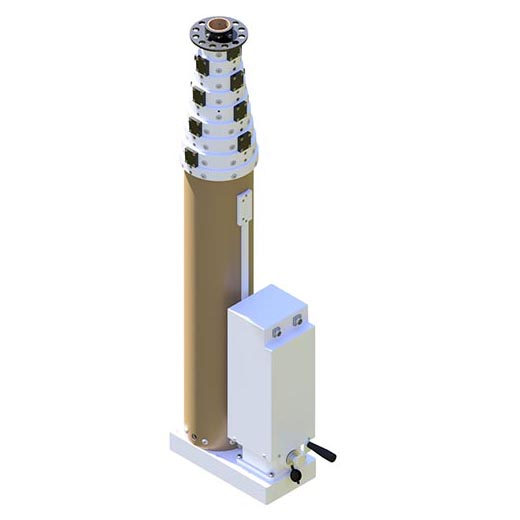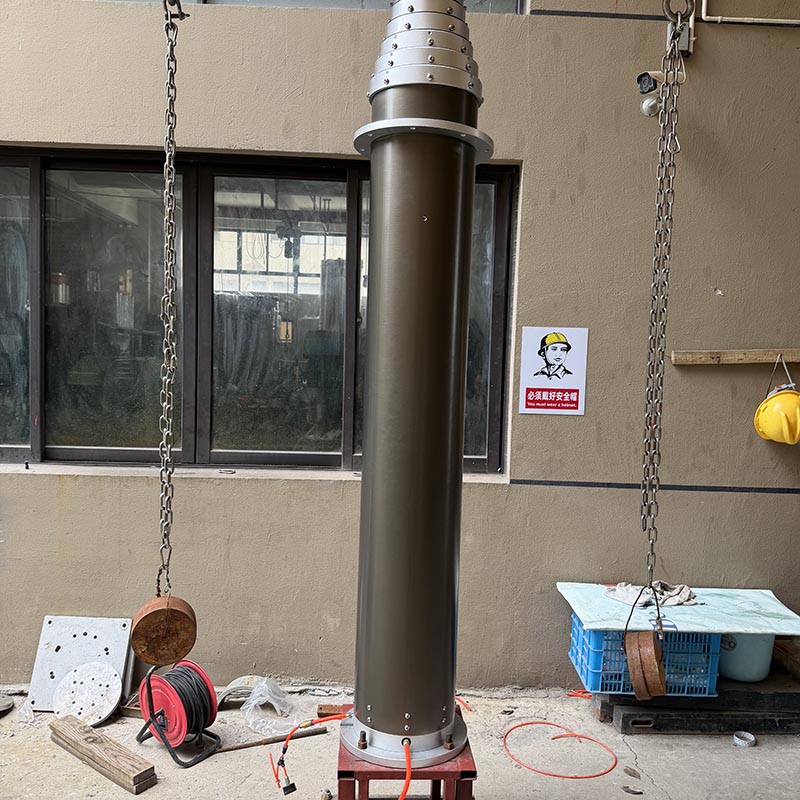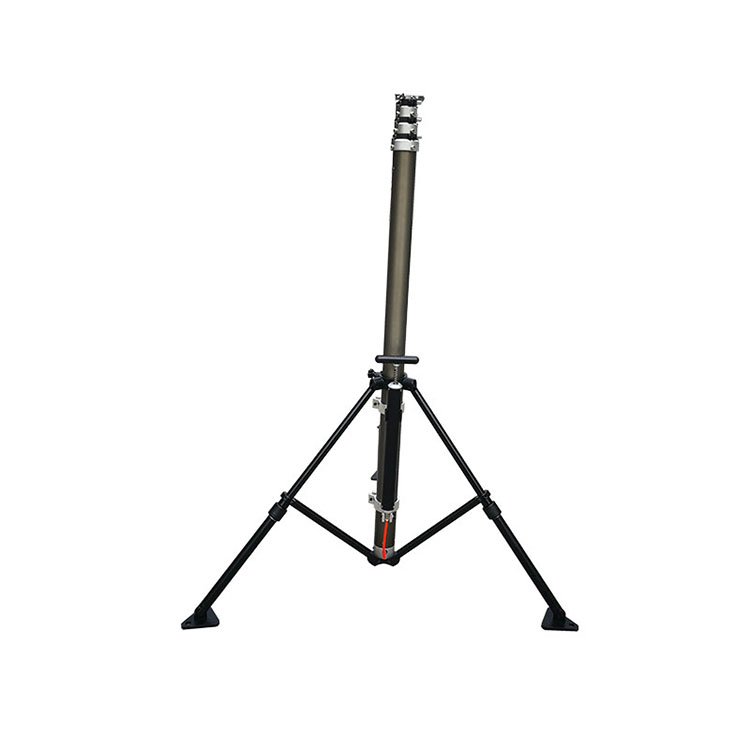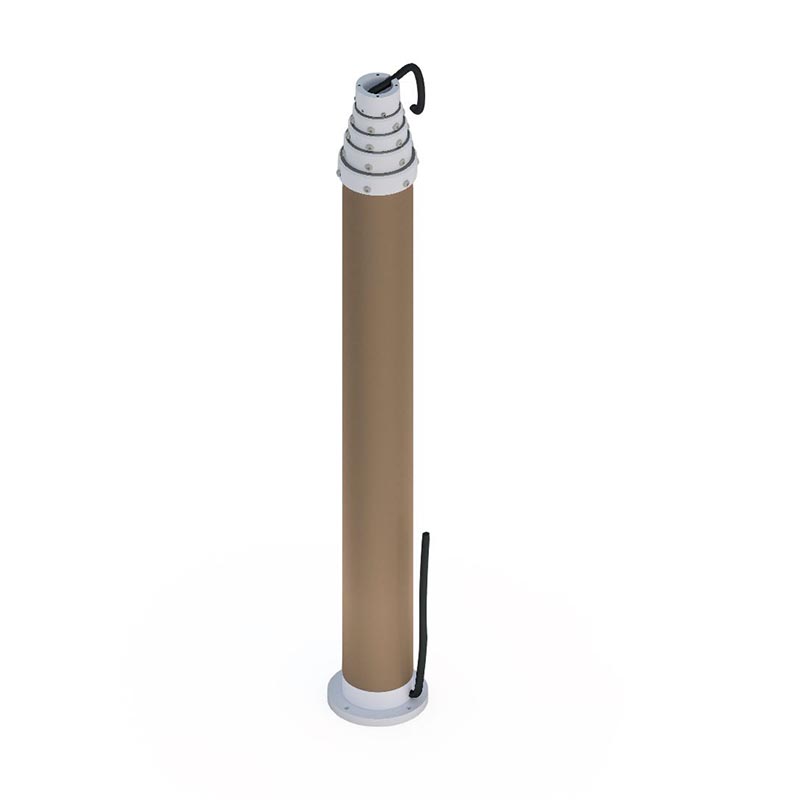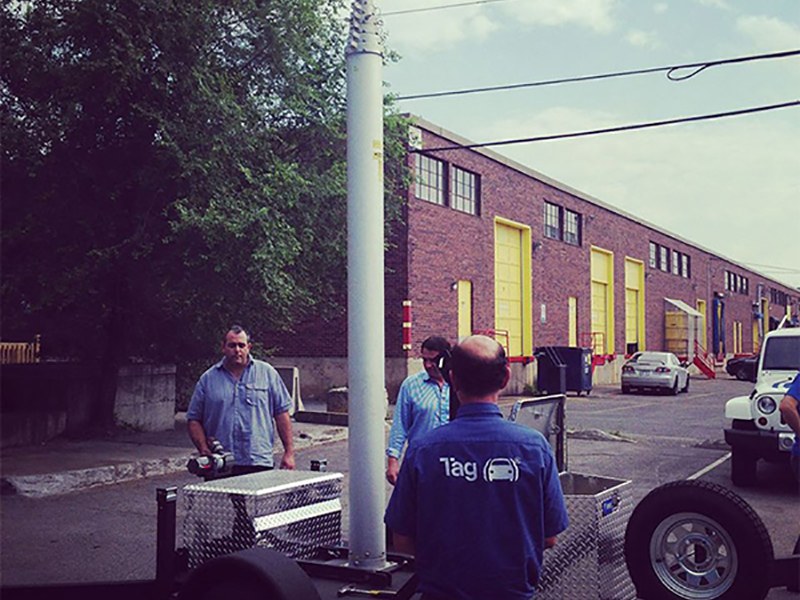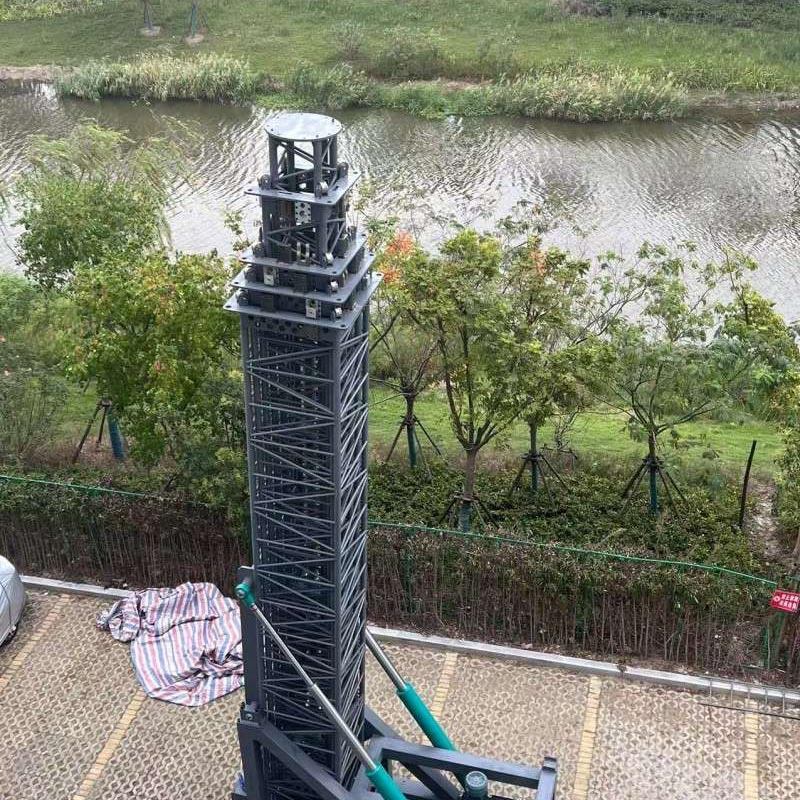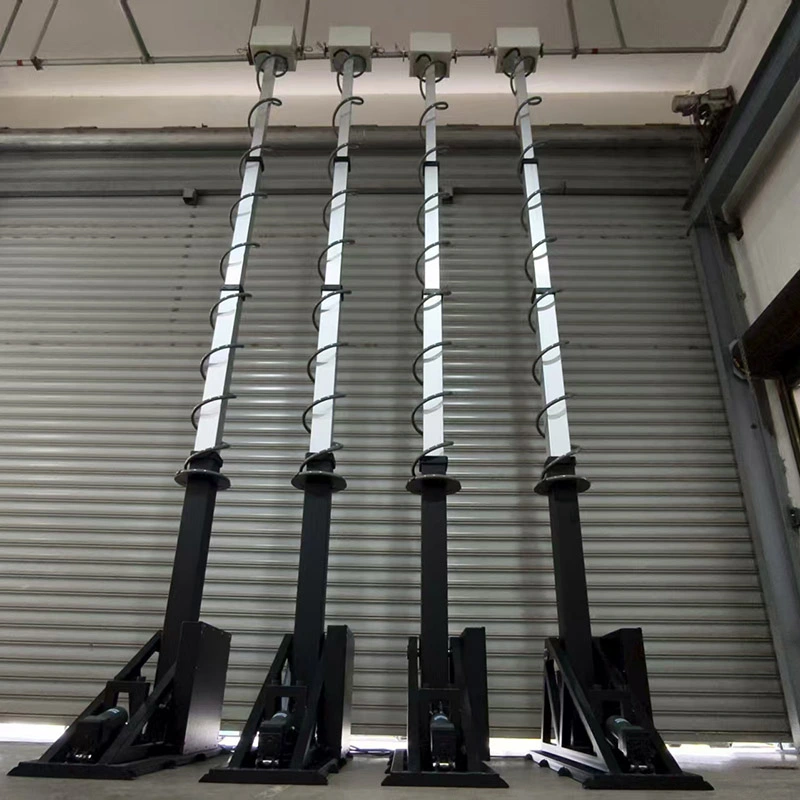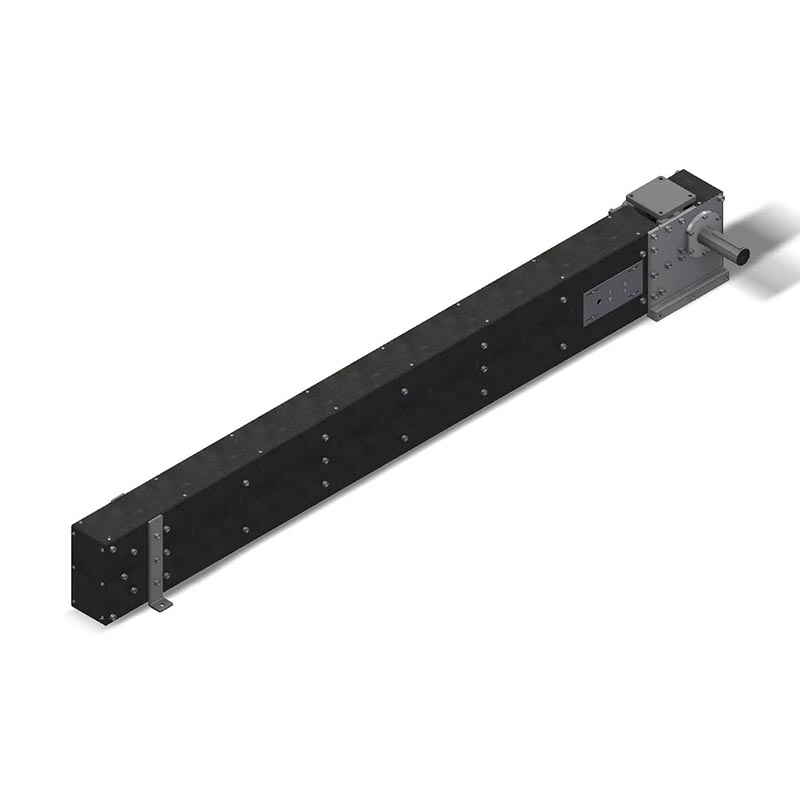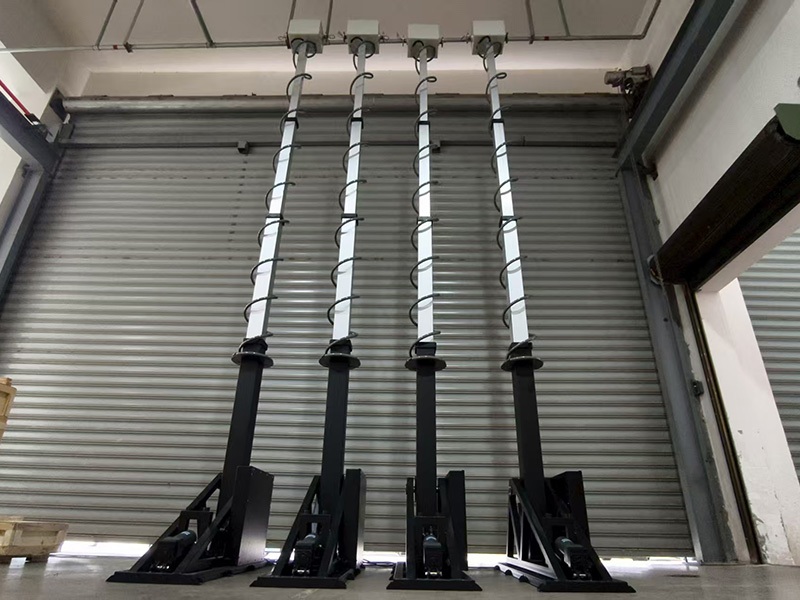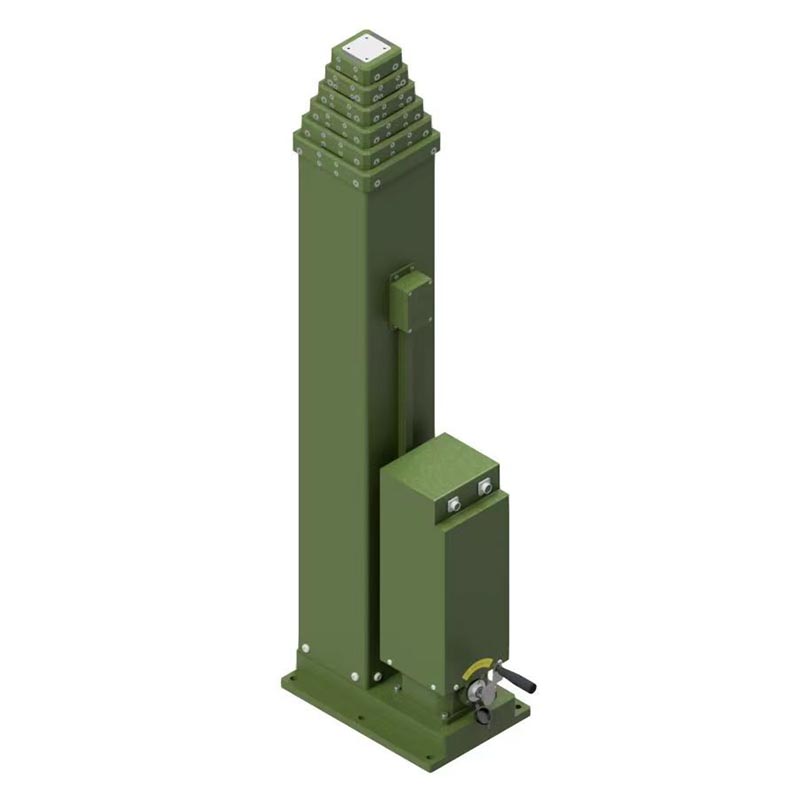

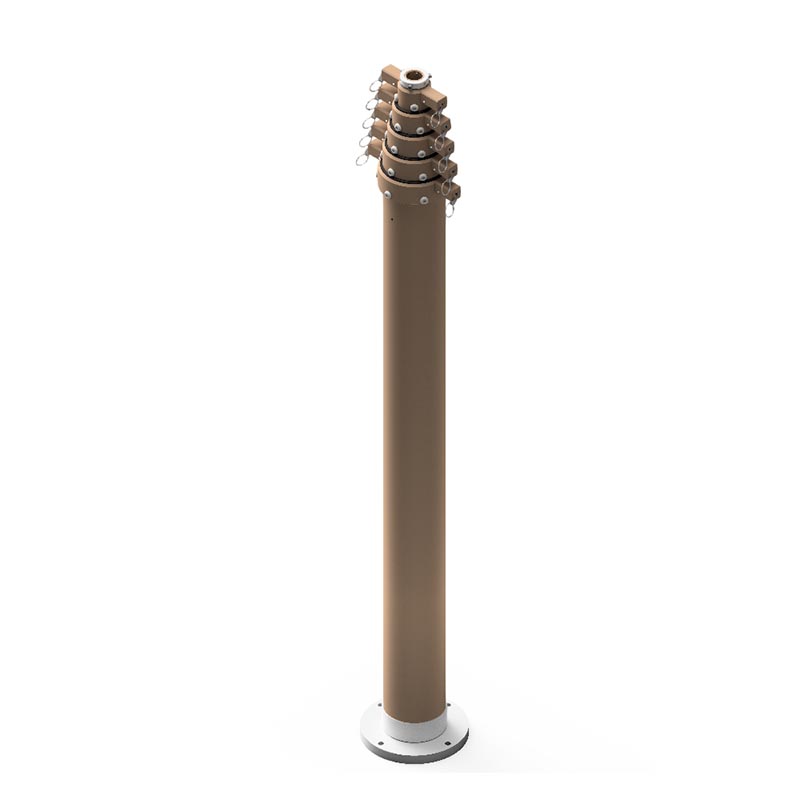
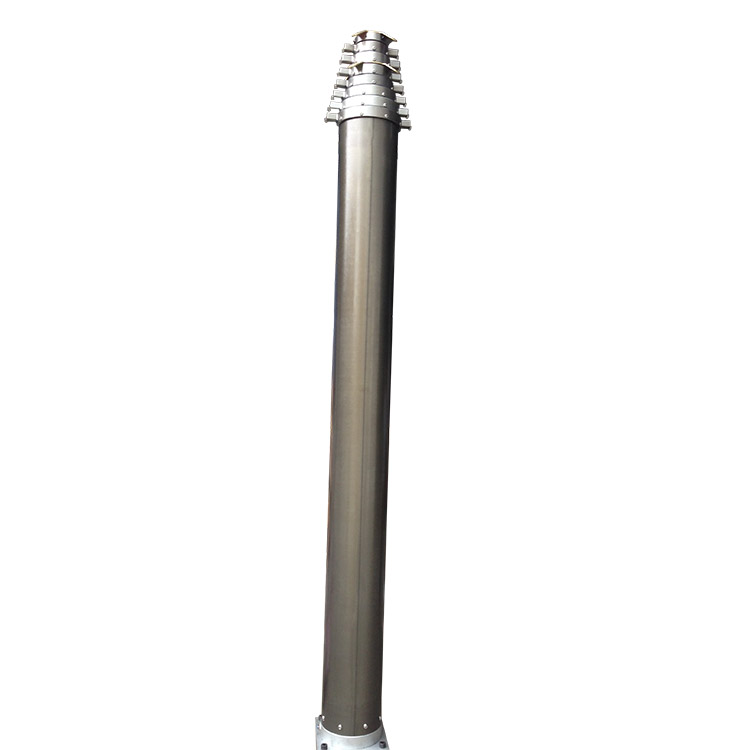
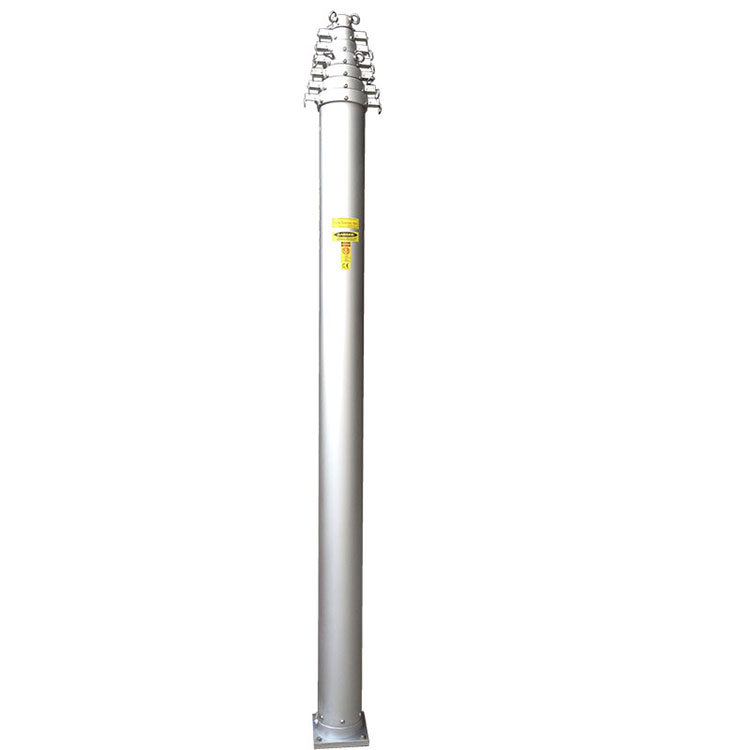
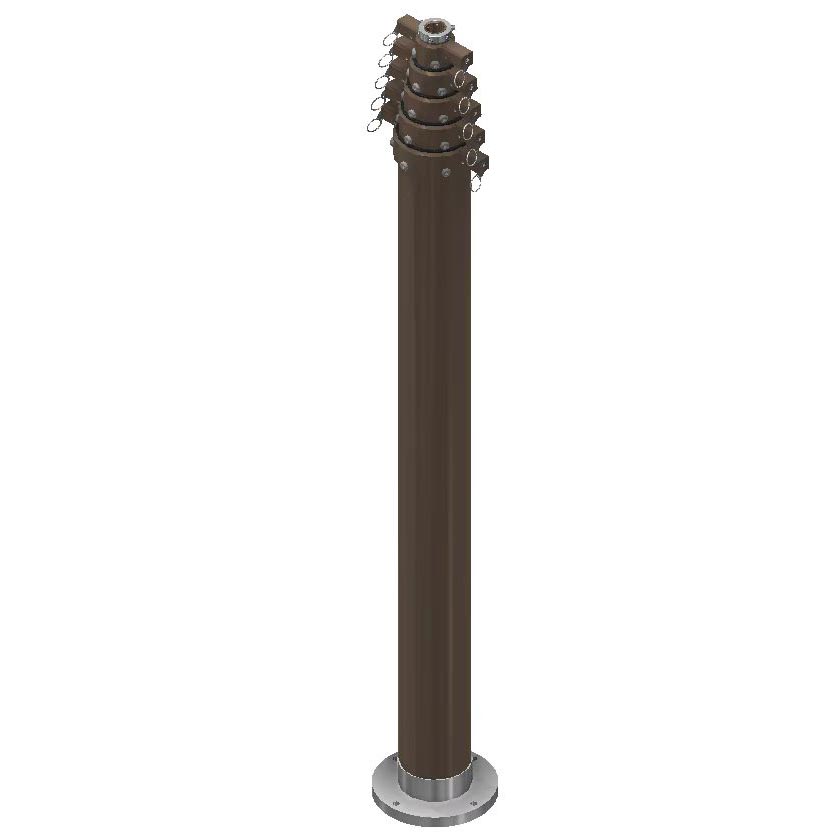
The locking pneumatic mast provided by Homall Factory is a long-lasting stationary lifting equipment with a highly mature technical system, which has been deeply rooted in the industry for many years. It mainly features the core advantages of unmanned operation, long-term stay in the air, and stable load-bearing. As an iterative product of a classic industry structure, this mast, with its simple and reliable mechanical structure and extremely low operation and maintenance requirements, has become the benchmark model for many similar locking pneumatic masts in the global market. It is widely used in professional scenarios such as national defense communication, border security, and construction of remote base stations.
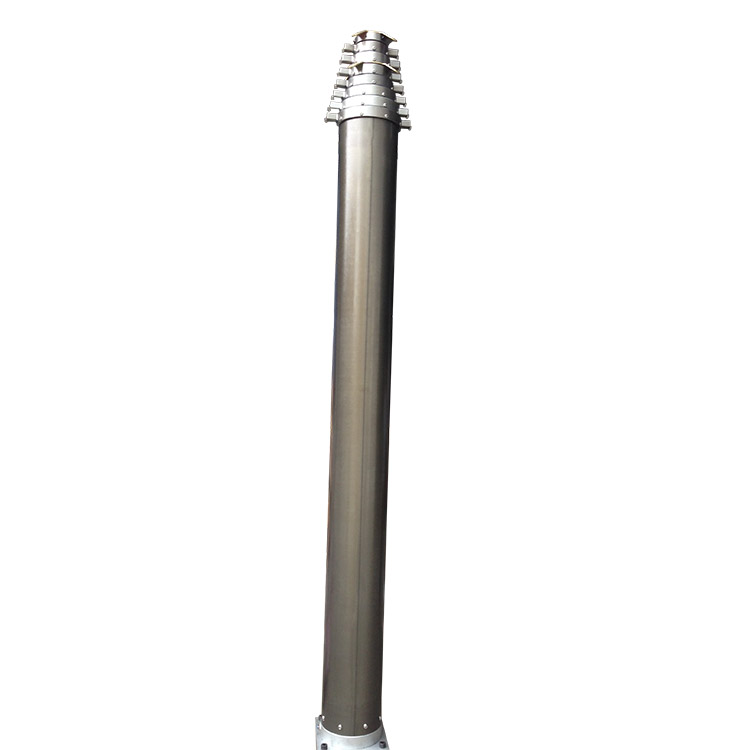
For military communications, border security, and semi-permanent telecom sites, equipment must stay elevated for days, weeks, or even months without supervision, our Locking Pneumatic Mast features precision machined mechanical locking collars that physically support the load once the mast reaches its target height. This dual redundancy design transfers the vertical load from the air column to the solid aluminum/steel structure.
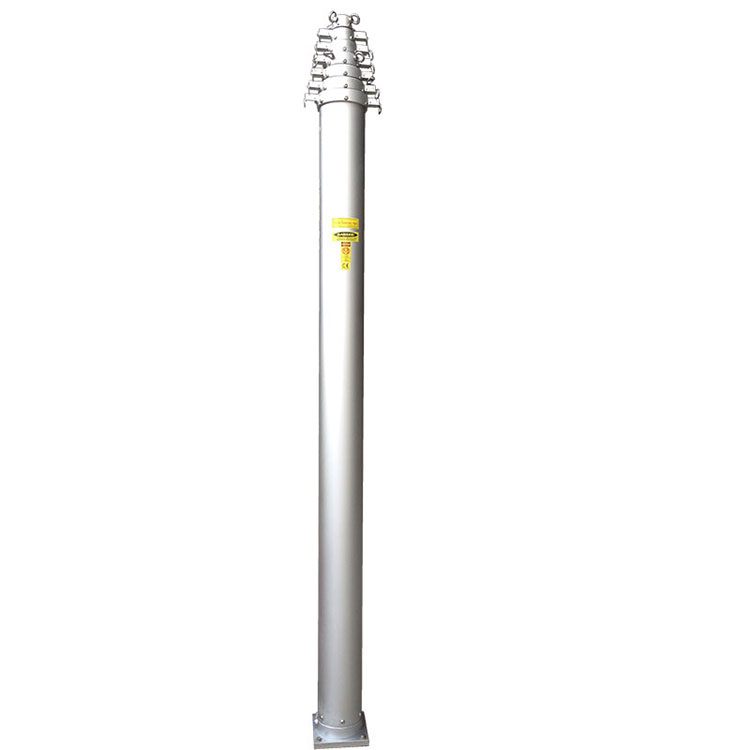
Unlike non-locking masts, the locking mechanism allows you to fully depressurize the mast once it is deployed. This eliminates the need to run a compressor continuously, saves power, prevents wear on pneumatic seals, and ensures the mast will never collapse.
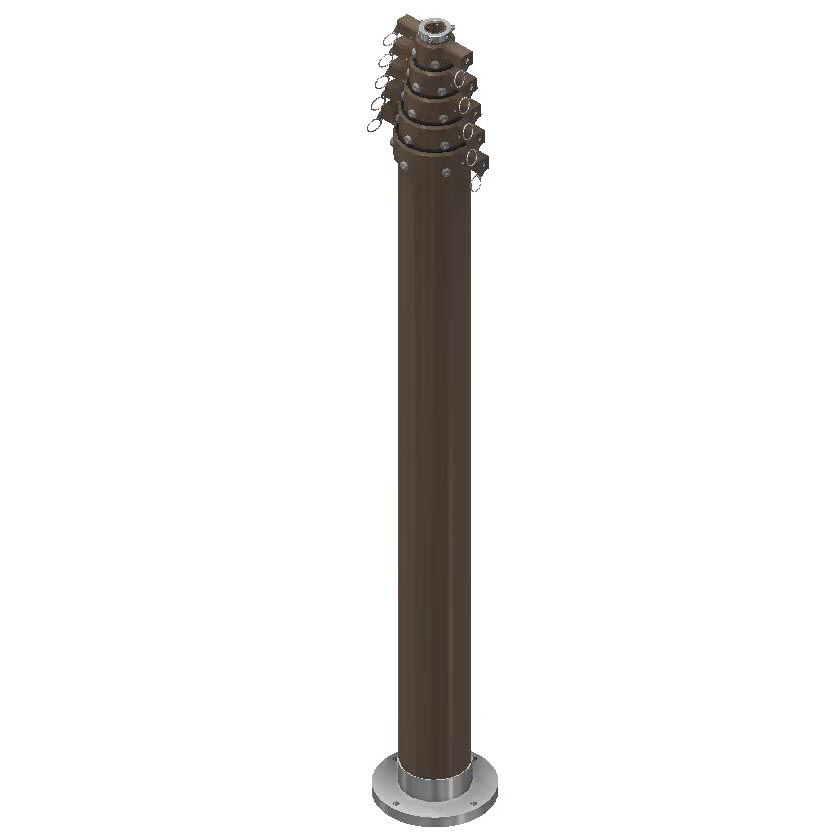
Engineered with high-tensile, corrosion-resistant locking rings that snap securely into place, capable of holding massive axial payloads indefinitely.
Designed to withstand extreme wind loads and ice accumulation without structural deflection.
Each locking joint is shielded against moisture, salt spray, and debris, ensuring smooth unlocking and retraction even after months of exposure in coastal or desert environments.
Operators can choose to lock all sections for maximum height, or lock only specific sections to adapt to varying tactical requirements on the fly.
Equipped with advanced internal keyways to prevent mast rotation, ensuring your directional equipment stays perfectly aligned during extension.
Features heavy duty wiper seals at each section collar to prevent dust, sand, and ice from entering the mast body ensuring maintenance free operation in hostile environment.
Continuous air pressure cushioning minimizes shock and vibration to sensitive top-mounted electronics during operation.
The locking pneumatic mast adopts a dual-redundant design of "air pressure lifting and mechanical locking load-bearing", which overturns the working logic of traditional pneumatic masts. During the lifting stage, the segmental smooth extension is completed by the pneumatic system. When the mast reaches the preset operation height, the high-strength mechanical locking ring automatically bites into and positions, completely transferring the vertical load-bearing load of the equipment from the air pressure system to the metal main structure. This design fundamentally eliminates the reliance on continuous air pressure and allows the equipment to be completely depressurized and shut down after deployment, without the need for the air compressor to continuously supply air.
Compared to ordinary non-locking pneumatic masts, this model completely solves the industry problems of high energy consumption during long-term operations, easy wear of seals, and high risks of mast collapse. After depressurization locking, the rigidity of the entire machine structure significantly improves. It will not experience height deviation or structural collapse due to air pressure fluctuations, minor pipeline leaks, or equipment start-stop failures. It provides stable operation for the precision electronic equipment, communication instruments, and monitoring devices installed on the top 24/7.
Address
Room B, 16/F, Euro Trade Centre, 9 Chiu Lung Street, Central, Hong Kong
Tel