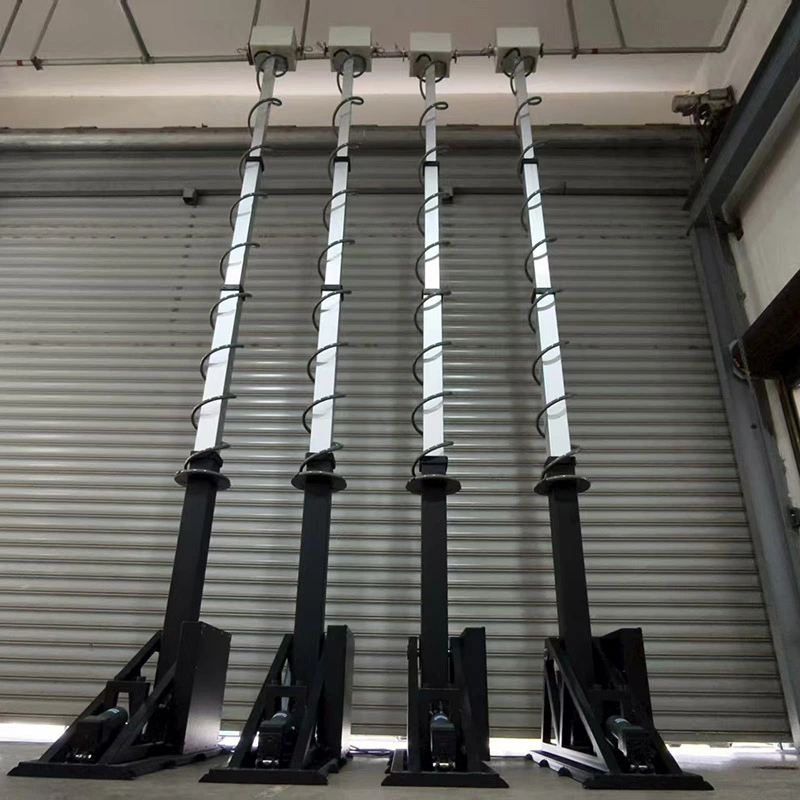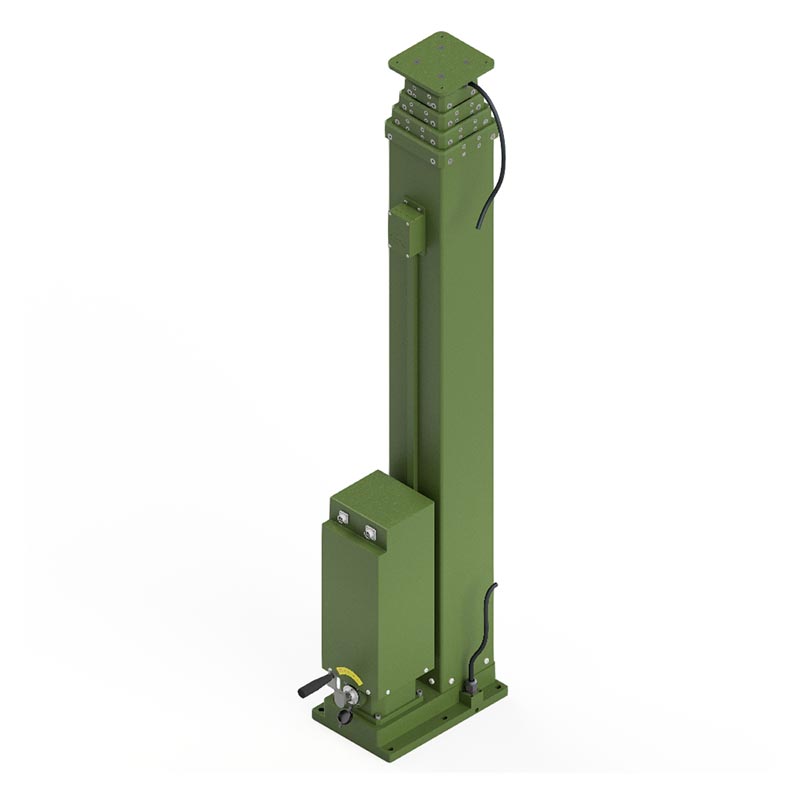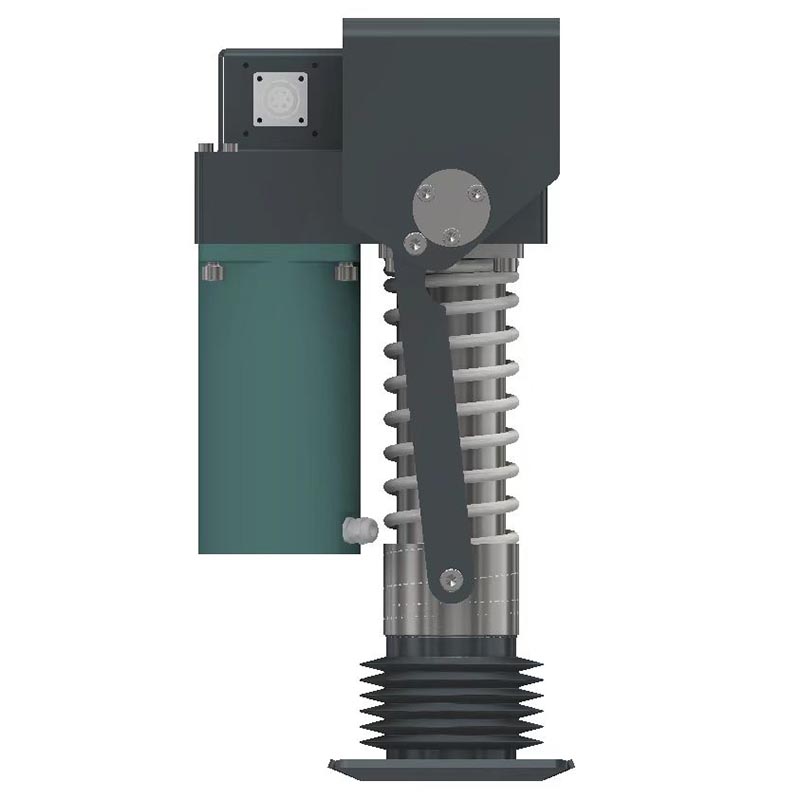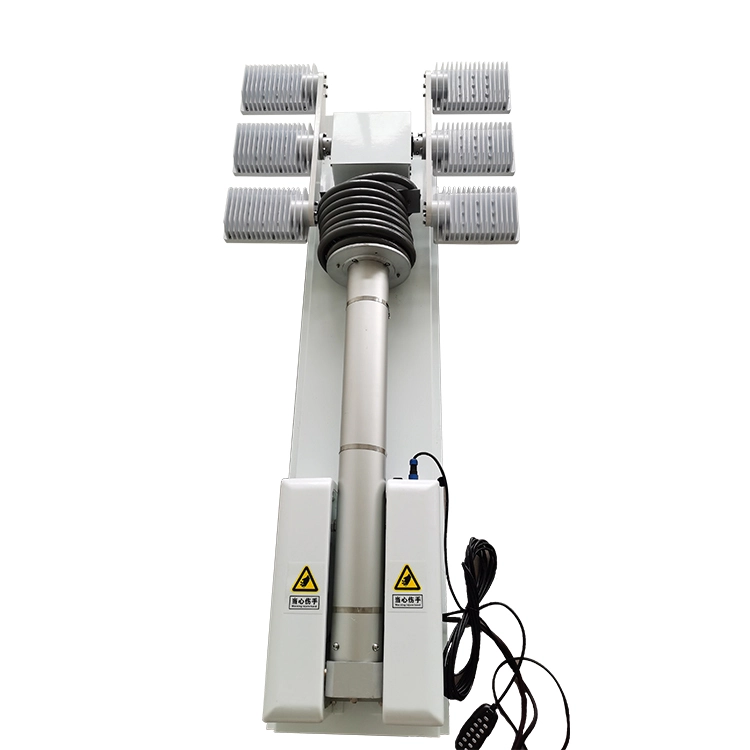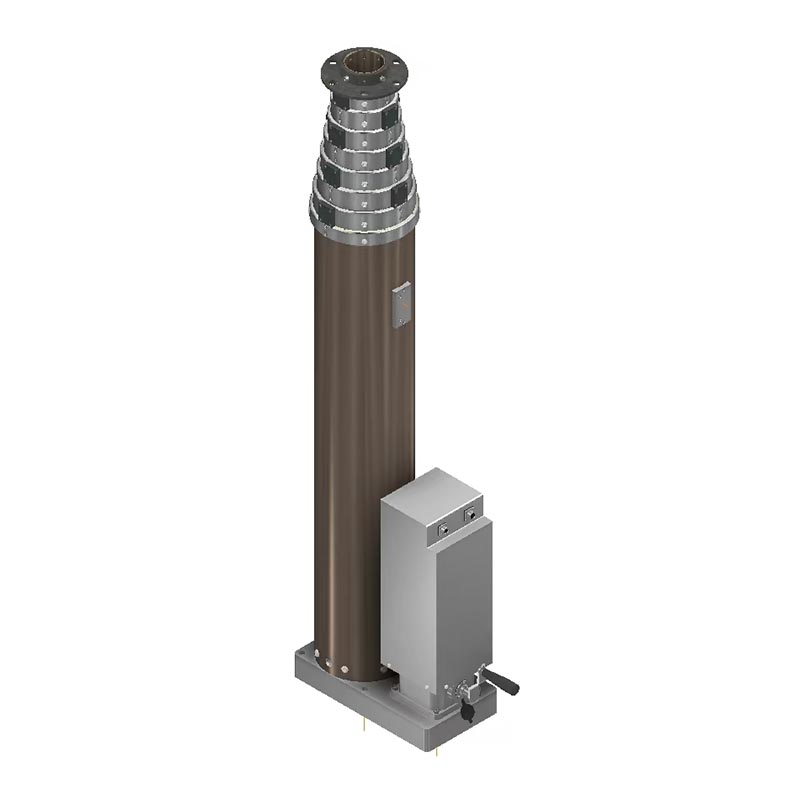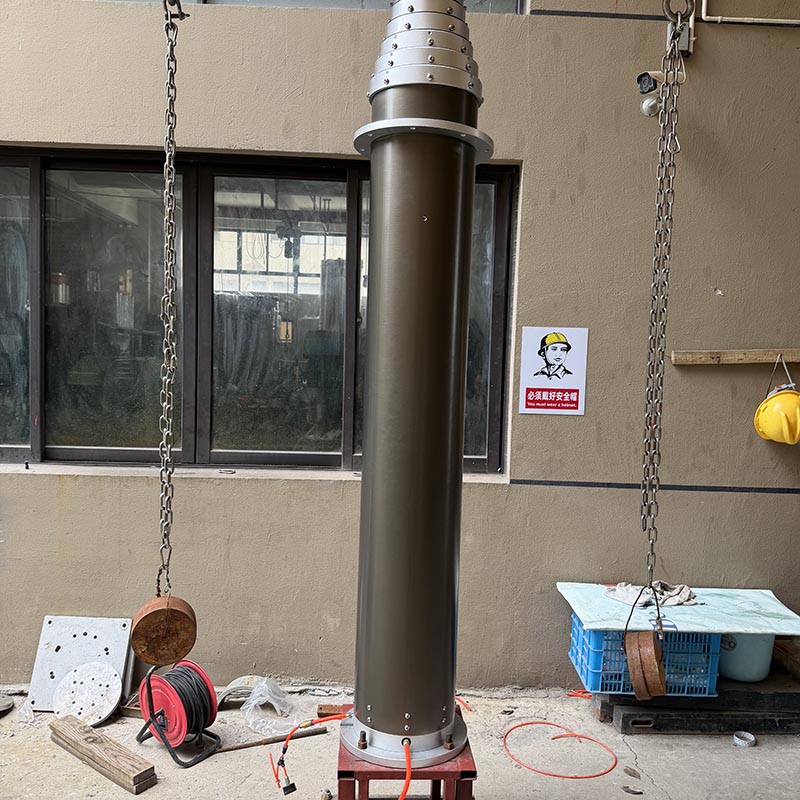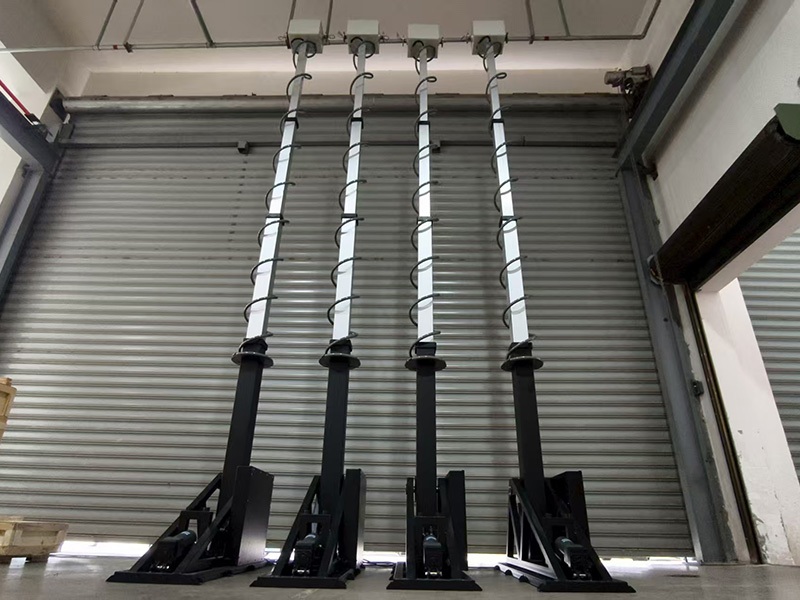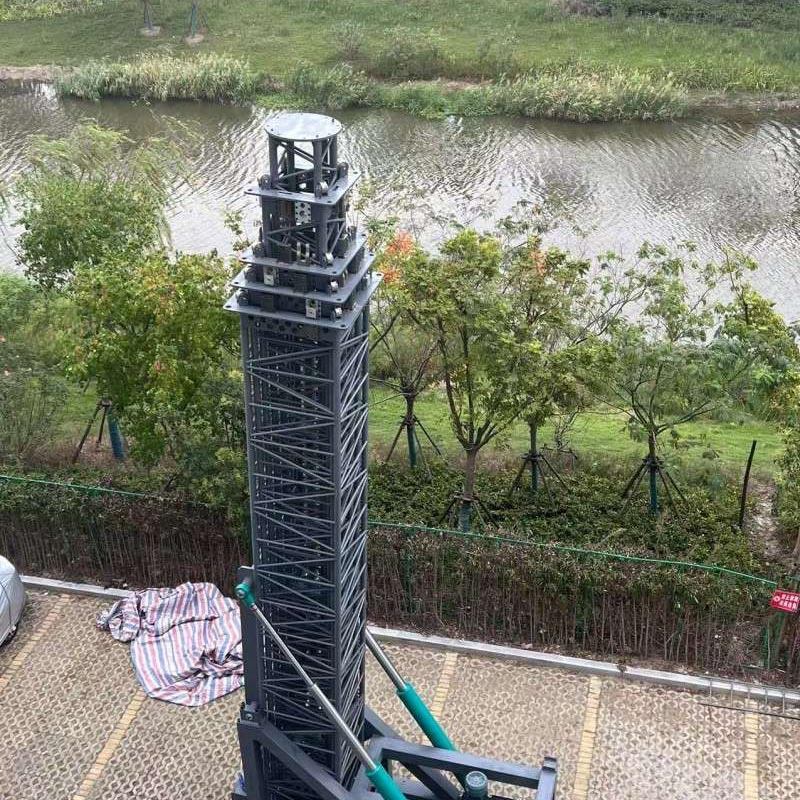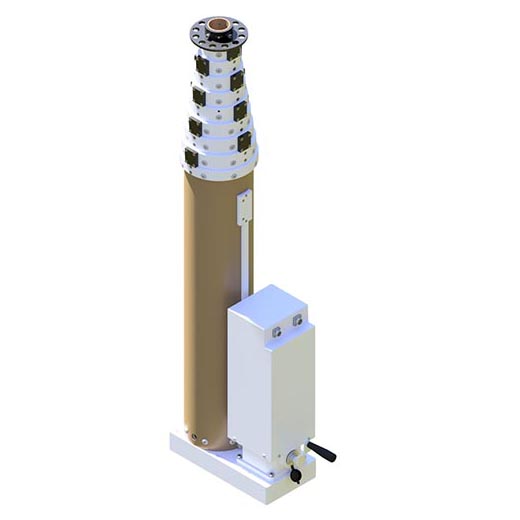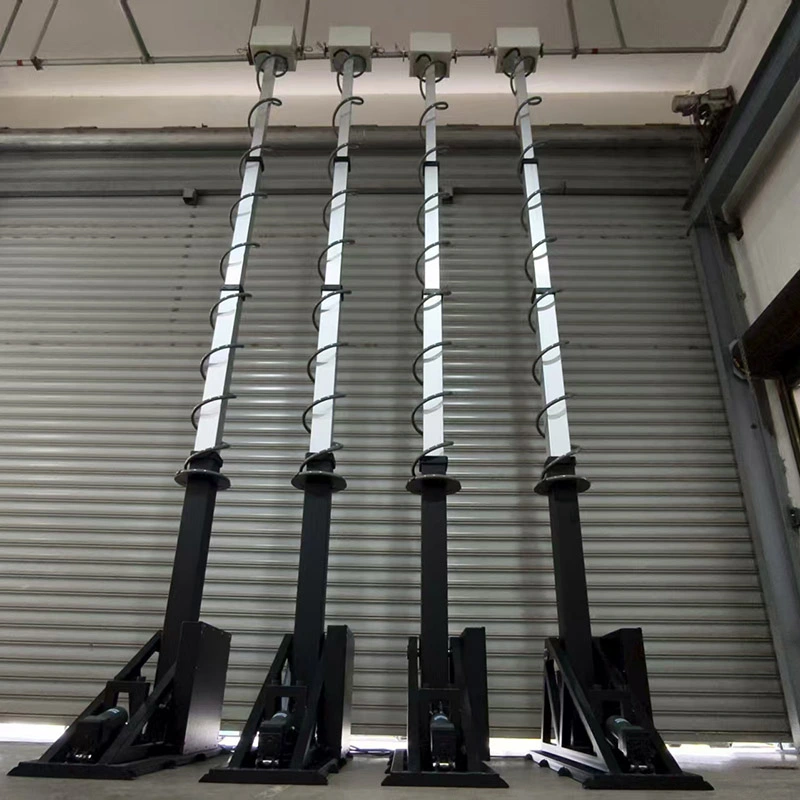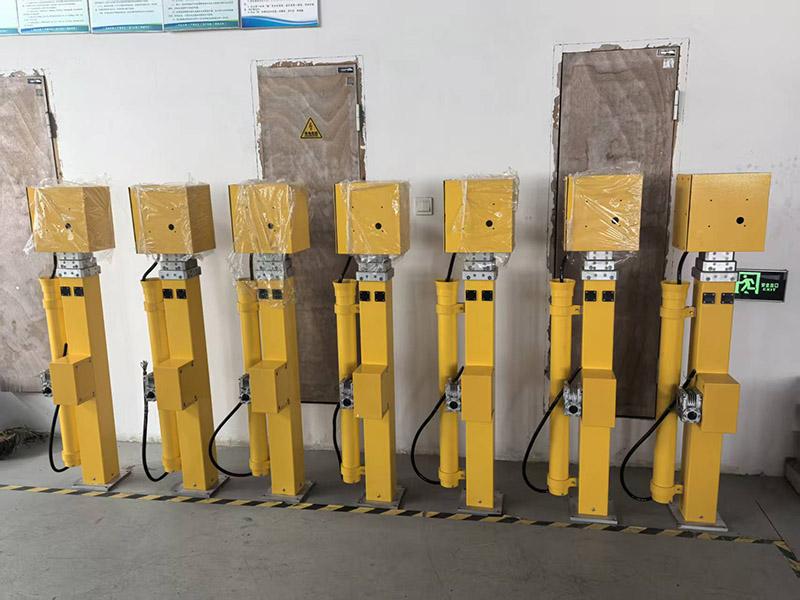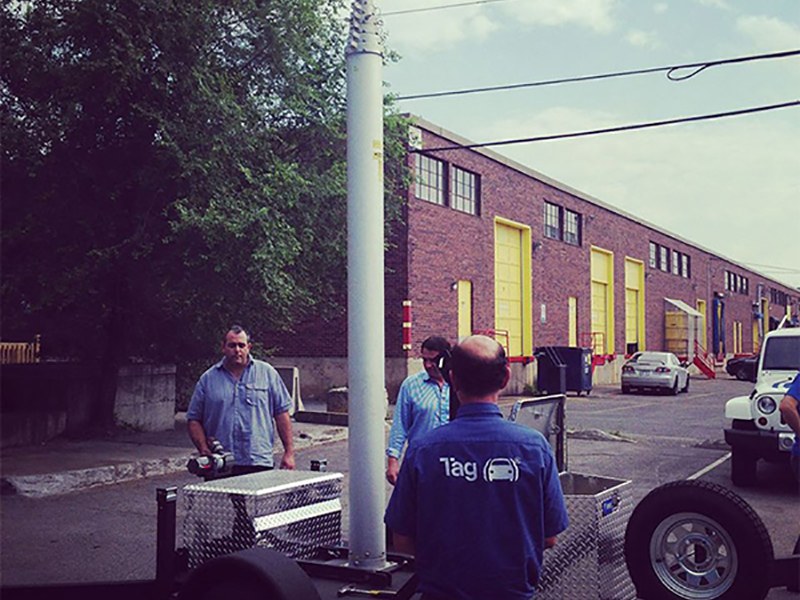

A 6m electric lockable spindle telescopic mast is a compact vertical lifting system designed to raise cameras, communication equipment, lighting fixtures, sensors, antennas, and other payloads to an elevated working position. By combining electric spindle drive, telescopic sections, and mechanical locking, the mast can provide controlled height adjustment without relying on traditional manual rope systems. For projects where installation space, positioning accuracy, operational convenience, and equipment stability matter, this type of mast offers a practical approach to temporary or permanent elevation.
A well-designed 6m electric lockable spindle telescopic mast can solve several common deployment challenges: limited installation space, difficult manual adjustment, inconsistent positioning, and the need to keep elevated equipment securely supported. The spindle mechanism converts motor power into controlled linear movement, while mechanical locking can help maintain the selected position. Before specifying a mast, buyers should evaluate payload, retracted height, mounting method, operating environment, wind exposure, power supply, cable routing, duty cycle, and safety requirements. The right configuration depends on the complete application rather than height alone.
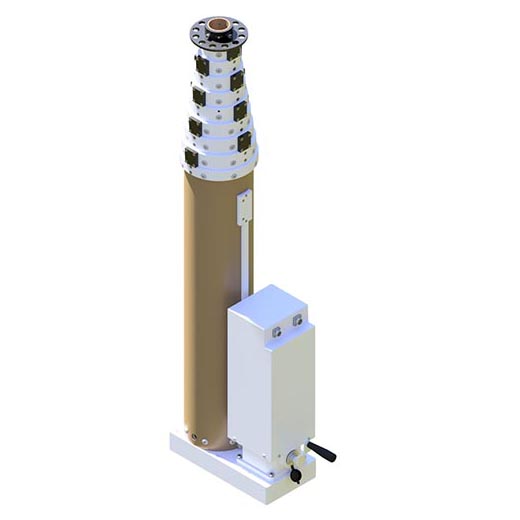
A 6m electric lockable spindle telescopic mast is an engineered lifting structure capable of extending to approximately six metres while remaining considerably shorter when retracted. It normally consists of multiple nested sections, an electric motor and spindle transmission, mechanical locking elements, a base structure, and a top mounting interface.
The term 6m describes the approximate maximum extended height. Electric indicates that an electrically powered actuator or motor drives the lifting mechanism. Lockable refers to the ability of the mast to mechanically retain its position rather than depending entirely on continuous motor force. Spindle describes the screw-driven lifting principle, while telescopic describes the nested sections that extend and retract.
Spindle-driven telescopic systems are attractive when controlled movement and repeatable positioning are important. Commercial spindle mast designs are available in several configurations, including systems around six metres with multiple telescoping sections and different payload capacities. Actual performance, however, depends on the specific model and configuration rather than the height designation alone.
The basic operating principle is relatively straightforward. An electric motor supplies rotational power to a spindle or screw mechanism. As the spindle rotates, mechanical components convert rotary motion into controlled linear movement. The telescopic sections then move upward or downward according to the direction of operation.
One advantage of a spindle-based architecture is that it can avoid some of the long-term concerns associated with exposed lifting ropes. Commercial spindle mast systems are specifically marketed for controlled elevation and mechanical locking, while other telescopic mast designs may use manual winches, pneumatic cylinders, or locking collars.
A telescopic structure can provide substantial working height without requiring a permanently tall structure. When retracted, the mast occupies a smaller vertical envelope, making it suitable for equipment shelters, mobile platforms, service vehicles, temporary installations, and compact technical sites.
Manual winches and hand-operated systems can be effective, but frequent height changes may require additional labor. An electric drive allows operators to control elevation from a suitable control interface, reducing repetitive manual lifting work.
Some applications need equipment to be positioned at a defined elevation rather than simply raised as high as possible. A motorized spindle system can support controlled movement and repeatable positioning when correctly configured.
Mechanical locking is particularly useful when a payload must remain elevated after the lifting cycle has ended. The locking design should be selected according to the expected payload, environmental forces, duty cycle, and applicable safety requirements.
Elevated cameras, antennas, lights, sensors, and communication devices often require power or signal cables. A well-planned mast can incorporate internal or protected cable routing, reducing exposure to snagging, abrasion, and environmental damage. Some commercial telescopic mast systems are supplied with internal cables or dedicated cable-management arrangements.
The six-metre elevation range is useful for applications that require a moderate increase in line-of-sight, illumination coverage, sensing height, or communication reach without constructing a conventional fixed tower.
| Application | Typical Payload | Main Benefit |
|---|---|---|
| CCTV and surveillance | Camera, PTZ or related equipment | Higher viewing position and adjustable deployment |
| Temporary lighting | Floodlights or work lights | Improved illumination coverage |
| Wireless communication | Antennas and radio equipment | Elevated signal position |
| Environmental monitoring | Sensors and measuring devices | Flexible sensor elevation |
| Mobile technical platforms | Mixed electronic equipment | Compact transport and deployment |
Telescopic masts are already used commercially for CCTV, lighting, measurement devices, communication equipment, and mobile surveillance applications. Six-metre systems are available in both manually operated and powered architectures, demonstrating the broad range of use cases for this height class.
Height is only one part of mast selection. A technically suitable system should be evaluated as a complete assembly.
| Specification | Why It Matters | Buyer Consideration |
|---|---|---|
| Extended height | Determines working elevation | Confirm actual usable height, not just nominal height |
| Retracted height | Determines transport and storage requirements | Check vehicle, cabinet, or enclosure dimensions |
| Payload | Determines compatible equipment | Include equipment, brackets, cables, and accessories |
| Wind conditions | Influences stability and structural loading | Specify site wind exposure and required operating conditions |
| Power supply | Determines motor compatibility | Confirm voltage, frequency, current, and control requirements |
| Mounting method | Transfers loads into the supporting structure | Select fixed, vehicle, mobile, wall, or platform mounting as appropriate |
| Section construction | Affects stiffness, weight, and corrosion resistance | Consider aluminum, steel, surface treatment, and environment |
Commercial six-metre spindle mast examples show that configurations can differ substantially in payload, nested height, section count, motor power, and diameter. For example, published spindle mast data includes six-metre configurations with five sections and different payload ratings, reinforcing the importance of specifying the application rather than ordering by height alone.
| Mast Type | Drive Principle | Typical Strength | Potential Consideration |
|---|---|---|---|
| Electric spindle mast | Motor and screw/spindle | Controlled powered movement and mechanical retention | Requires appropriate electrical and control design |
| Pneumatic mast | Compressed air | Useful for certain mobile and industrial systems | Requires suitable air supply or compressor |
| Manual winch mast | Hand-operated mechanical winch | Simple operation and no motor required | More operator involvement |
| Fixed tower | Permanent structure | Long-term elevated installation | Less flexible and often requires more installation work |
Manual and pneumatic telescopic masts are widely used, while spindle-driven systems offer a different approach to powered vertical positioning. The appropriate choice depends on the required height, payload, operating frequency, available utilities, environmental conditions, and installation method.
A clear technical specification prevents mismatches between the mast and the equipment it needs to carry. Before requesting a quotation, buyers should prepare the following information:
Even a high-quality mast can perform poorly if the foundation, mounting structure, electrical supply, or payload interface is inadequate. Installation should therefore begin with the complete system rather than the mast alone.
For outdoor applications, wind loading deserves particular attention. Commercial six-metre masts may specify maximum carrying capacity and wind conditions separately, meaning a payload that is acceptable in static conditions may require additional consideration in exposed environments.
Routine inspection is important for any powered lifting structure. A maintenance schedule should be adapted to operating frequency and environmental exposure.
For equipment installed outdoors, corrosion protection is particularly important. Telescopic mast products used for outdoor applications may employ galvanized steel, treated aluminum, or other protective finishes depending on the design.
It normally refers to the maximum extended height of the mast. Buyers should also confirm the retracted height because it determines transportation, storage, and installation requirements.
The spindle converts rotational movement from the electric drive into controlled linear movement, allowing the telescopic sections to extend or retract.
A mechanical locking system can help retain the mast at its working position instead of relying solely on continuous motor force. The actual locking capacity must be verified against the manufacturer's specifications.
Yes, six-metre telescopic masts are commonly used for CCTV and surveillance equipment. However, camera weight, mounting hardware, wind exposure, vibration requirements, and the mast's rated payload must all be evaluated before installation.
It can be, provided the specific mast is designed and protected for the intended outdoor environment. Weather exposure, corrosion, temperature, wind, water ingress, and electrical protection should all be considered.
The requirement depends on the motor and control system. Commercial spindle mast configurations can be designed for different electrical supplies, so voltage, frequency, current, motor power, and control requirements should be confirmed before ordering.
Calculate the complete top load, including the primary device, mounting hardware, cables, protective housings, and accessories. The selected mast should then be evaluated for both static payload and environmental loads.
Depending on the manufacturer and application, customization may cover mounting interfaces, electrical configuration, control systems, section dimensions, cable routing, mounting method, finish, and other application-specific requirements. A complete technical drawing and load specification should be reviewed before production.
A 6m electric lockable spindle telescopic mast provides a practical way to achieve controlled vertical elevation while keeping the system relatively compact when retracted. Its combination of electric operation, spindle-driven movement, telescopic construction, and mechanical locking makes it suitable for a wide range of equipment-elevation applications, including surveillance, lighting, communications, sensing, and mobile technical systems.
The most important purchasing decision is not simply choosing a six-metre mast. Payload, wind exposure, retracted dimensions, mounting method, electrical supply, operating frequency, cable routing, environmental protection, and safety requirements must all be considered together. A properly matched configuration can improve deployment efficiency while providing a stable and manageable platform for elevated equipment.
With experience in industrial equipment solutions, Homall Industry Limited can support buyers in evaluating application requirements and developing a suitable telescopic mast configuration. If you need assistance with specifications, mounting arrangements, electrical requirements, or customized solutions, contact us to discuss your project requirements.
-